What does "style" mean in an AI image prompt — visual style
Style — in Italian stile or stile visivo — is the prompt parameter that defines how a scene is represented: the artistic medium, the technique, the cultural aesthetic. It's what makes an image immediately recognizable as photography, illustration, painting, concept art, or something else entirely.
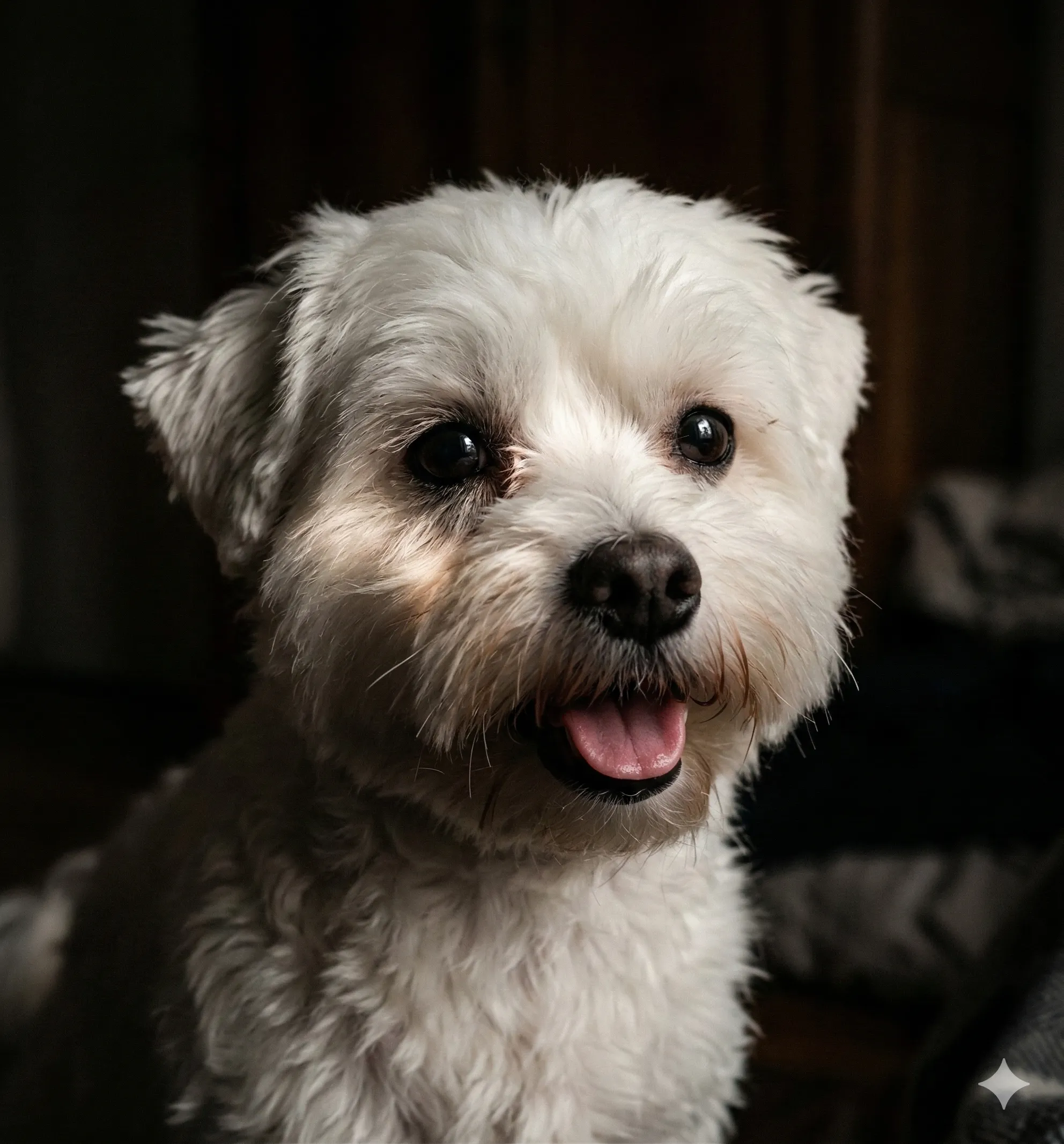
🐾 Teo has tried every possible style. He prefers german abstractism.
With Prompt Reverser you can automatically identify the style / stile visivo of any AI image — getting the exact technical terms ready to replicate that aesthetic in your prompts.
Definition: what is style in an AI prompt
Style (English) = stile / stile visivo (Italian) In AI image prompts, style indicates the artistic medium, aesthetic movement, or visual technique of the image to be generated. It answers the question: does it look like a photograph? A painting? An editorial illustration? A 3D render?
Why style is essential in an AI prompt
Without a specified style, the model produces an "average" image — generic and anonymous:
a lighthouse at sunset
→ generic result

a lighthouse at sunset, hyperrealistic photography, golden hour
→ high-resolution photograph, dramatic light

a lighthouse at sunset, watercolor illustration, loose brushstrokes
→ painterly watercolor, soft palette

a lighthouse at sunset, concept art, digital painting
→ game designer illustration, epic light, highly detailed
All style terms for AI prompts (English → Italian)
Photographic styles
| Term EN | Term IT | Visual effect | |---|---|---| | photorealistic | fotorealistico | Replicates a high-resolution photograph | | hyperrealistic | iperrealistico | Extreme detail, beyond photorealistic | | 35mm film photography | fotografia su pellicola 35mm | Film grain, unpredictable colors, analog atmosphere | | polaroid | polaroid | White borders, washed-out colors, instant feel | | macro photography | fotografia macro | Extreme detail, blurred background | | long exposure | lunga esposizione | Motion blur, light trails | | documentary photography | fotografia documentaria | Reportage style, spontaneous | | Kodak Portra 400 | Kodak Portra 400 | Film: warm tones, natural skin tones | | Fujifilm Superia | Fujifilm Superia | Film: vivid colors, medium contrast |
Painterly styles
| Term EN | Term IT | Visual effect | |---|---|---| | oil painting | pittura a olio | Dense texture, visible brushstrokes, deep colors | | watercolor | acquerello | Soft edges, color transparency, unpainted white areas | | gouache illustration | illustrazione gouache | Like watercolor but opaque, widely used in editorial | | ink drawing | disegno a inchiostro | Sharp lines, black and white, decisive strokes | | charcoal sketch | schizzo a carboncino | Powdery texture, soft gradients | | pastel drawing | disegno a pastello | Soft muted colors, grainy texture |
Illustrative and digital styles
| Term EN | Term IT | Visual effect | |---|---|---| | digital illustration | illustrazione digitale | Illustrative style created on a computer | | concept art | concept art | Game designer and film art director style | | editorial illustration | illustrazione editoriale | Magazine style: clean, expressive, narrative | | flat design illustration | illustrazione flat design | Flat colors, simplified shapes, no shadows | | vector art | grafica vettoriale | Precise geometric lines, uniform colors | | cel-shaded | cel-shading | Sharp black outlines, flat colors (anime/cartoon style) | | 3D render | render 3D | Three-dimensional rendering software look | | isometric illustration | illustrazione isometrica | 45° overhead view, commonly used for architecture |
Aesthetic and cultural styles
| Term EN | Term IT | Visual effect | |---|---|---| | vaporwave aesthetic | estetica vaporwave | Pink, purple, light blue, retro '80s–'90s graphics | | cyberpunk | cyberpunk | Neon, rain, futuristic urban environments | | cottagecore | cottagecore | Romantic rural, flowers, fabrics, natural light | | dark academia | dark academia | University settings, books, candles, dark colors | | art nouveau | art nouveau | Flowing lines, nature motifs, golden ornamental colors | | bauhaus | bauhaus | Pure geometry, primary colors, rationalism | | y2k aesthetic | estetica y2k | Metallic chromes, pixels, late '90s graphics | | wabi-sabi | wabi-sabi | Imperfection, nature, simplicity, the patina of time |
How to use style in an AI prompt: practical techniques
The base structure
[subject + scene] + [style] + [optional sub-technique]// Same subject, three different styles:
a cat sitting on a windowsill, photorealistic, natural light, 50mm lens
a cat sitting on a windowsill, watercolor illustration,
loose brushstrokes, soft pastel palette
a cat sitting on a windowsill, concept art,
digital painting, cinematic lightingSpecifying the photographic sub-style
// Generic:
film photography

// Precise:
35mm film photography, Kodak Portra 400, slight grain, warm skin tones
Artist references
// Direct reference (historical):
in the style of Gustav Klimt, gold leaf patterns, art nouveau

// Descriptive approach (contemporary):
thick impasto brushstrokes, swirling compositions,
complementary colors, post-impressionist style
Style across different AI generators
Midjourney excels with painterly, cinematic, and aesthetic styles. Responds well to precise cultural references.
DALL·E handles clear, well-defined styles: watercolor illustration, photorealistic, oil painting.
Stable Diffusion is the most flexible with the right checkpoints: DreamShaper for illustration, Realistic Vision for photorealism.
Extracting style with Prompt Reverser
The Style / Stile tag returned by Prompt Reverser identifies visual characteristics you often can't verbalize yourself.
Example: uploading a modern illustrated book cover returns: editorial illustration, flat design, limited color palette, geometric shapes, gouache texture
Access the analysis at Prompt Reverser.
FAQ — Frequently asked questions about "style" in AI prompts
What does style mean in an AI prompt? Style means visual style. It indicates the artistic medium (photography, painting, illustration) or cultural aesthetic (cyberpunk, vaporwave, dark academia) of the image to generate.
What is the difference between style and mood in an AI prompt? Mood describes the emotion (melancholic, epic, dreamy). Style describes how it looks visually (photography, watercolor, concept art). They are complementary.
Can I use an artist's name in my prompt? Yes, in the style of [artist] is technically permissible. Some models have restrictions on certain living artists.
How many styles can I combine in a prompt? It's best not to exceed two compatible styles. Conflicting styles produce incoherent results.
How do I identify the style of an AI image I like? With Prompt Reverser: upload the image and the tool returns the style terms ready for your prompt.
Related article: What does Mood mean in an AI prompt → Related article: What does Cinematic mean in an AI prompt →